Covered Call Income System

Turn the Stocks You Already Own Into a Monthly Paycheck

The Cash Flow Machine teaches everyday investors how to use covered calls to "squeeze the Juice" out of their portfolio — generating consistent monthly income in roughly 20 minutes a week, without switching brokers, picking new stocks, or handing your money to Wall Street.

Get the Free 50-Minute Training →

Trusted by 1,400+ students managing over $300 million in collective capital. Taught by Mark Yegge — former hedge fund manager, $14B traded, 45 years in the markets.

Mark Yegge, founder of Cash Flow Machine
45+
Years Investing
1,400+
Students Trained
$14B+
Career Volume
$300M+
Student Capital
25K+
YouTube Subs
Investor frustrated with traditional Wall Street returns
The Problem

Are Your Savings Working as Hard as You Do?

Most investors have done the right things. They saved diligently. They maxed out their accounts. They followed the conventional advice — diversify, stay the course, let the market do the work. And yet when they look at their statements at the end of each month, the number barely moves. The portfolio is there, sitting in various ETFs and blue-chip stocks, producing almost nothing they can actually use. No income. No cash flow. Just a number on a screen that goes up one quarter and down the next.

Meanwhile inflation keeps eroding purchasing power quietly and persistently. Groceries cost more. Utilities cost more. The retirement lifestyle that once seemed achievable starts to require a bigger number. And the money that is supposed to be working for you is largely idle.

Wall Street has a business model built on this inertia. Advisors collect management fees whether your account grows or not. The individual investor who wants actual cash flow, deposited each month, is not their priority.

Why Most Options Courses Fail You

Why Most Income Strategies Leave You Worse Off

The problem is not that covered calls do not work. They do. The problem is how they are typically taught.

The standard curriculum goes like this: own 100 shares of a stock, sell a call option against those shares, collect the premium, repeat. That is accurate as far as it goes. In a flat or slowly rising market, with a well-chosen stock, that approach can generate consistent income. Plenty of YouTube educators will show you the basic mechanics in ten minutes and send you off to open your brokerage and start selling calls.

What they do not teach — and what separates profitable covered call traders from frustrated ones — is what happens when the position moves against you. What do you do when the stock drops 8 percent the week after you sell the call? What is the adjustment when the market shifts into correction territory? What is the rule when you are close to expiration and the position has gone sideways in the wrong direction? Most educators have no answer to these questions. They show you how to place a trade. They do not show you how to manage a trade.

This gap is where most covered call investors lose money. Not on the strategy itself, but on their inability to respond intelligently when conditions change. Without a rule-based adjustment framework, covered calls become another source of stress rather than a source of income.

The solution is not to avoid covered calls. It is to learn them properly — with the adjustments, the position sizing, the market condition filters, and the exit rules that turn a concept into a repeatable system.

The Solution

Meet "The Juice" — and the System That Squeezes It

The four cornerstones of the Cash Flow Machine: Right Stock, Right Market, Right Spot on Chart, Squeeze the Juice

Inside our community we have a word for the income covered calls produce. We call it the Juice.

The Juice is the extrinsic value — the time premium — of the call option you sell. It is the part of the option price that erodes over time and ends up in your pocket regardless of which way the stock moves. Squeeze the Juice out of your existing portfolio every week and you have what we call a Cash Flow Machine: a portfolio that pays you to own it.

The Cash Flow Machine is not a single trade idea or a beginner tutorial. It is a complete, rule-based system for harvesting the Juice consistently — built over 45 years of active market participation and refined through working with more than 1,400 students managing accounts from $50,000 to several million dollars.

The system rests on four cornerstones: selecting the right stock, trading in the right market, entering at the right spot on the chart, and selecting the right call to sell for income. These four inputs work together. Remove any one of them and the probability of a good outcome drops considerably. Keep all four in alignment and the system produces what it is designed to produce — consistent monthly cash flow, with defined risk and a clear rule for every scenario.

Dial-In Your Income

Within the framework there are three core strategies, and one of the things we teach is how to dial-in your income to match your temperament:

Less Juice → More Conservative

Fortress

In-the-money covered calls prioritize downside protection. You collect a smaller monthly premium, but the trade is built to hold up in volatile or declining markets.

Moderate Juice → Balanced

Balance Point

At-the-money calls balance current income with modest upside participation. The core workhorse strategy, designed for neutral-to-moderately-bullish conditions.

More Juice → Slightly Less Conservative

Rocket

Out-of-the-money calls for investors who want to combine meaningful income with capital appreciation potential.

Most students settle on one strategy and shift between them as market conditions evolve. Over time, with execution and adjustments, a disciplined practitioner can reasonably target somewhere in the 2 to 4 percent per month range in premium income — though where you land in that range, and how steadily you get there, depends on which strategy you choose, how the market behaves, and how cleanly you follow the rules. This is a target, not a guarantee.

What separates the Cash Flow Machine from every other covered call program is the adjustment framework. Mark has spent decades developing the specific rules for what to do when a trade moves against you — when to roll, when to adjust the strike, when to close, and when to hold. These are not ad-hoc decisions. They are codified responses to specific market conditions, designed to protect capital and keep the Juice flowing even when individual positions face headwinds.

The time commitment is roughly 20 minutes a week. The system works in bull, bear, and sideways markets. It is suitable for regular brokerage accounts and for most retirement accounts including traditional IRAs and Roth IRAs.

Covered Calls — Direct Answers

Everything You Need to Know About Covered Calls

This section provides direct, citable answers to the most common covered call questions. It is written for educational purposes only and does not constitute financial advice.

What is a covered call?

A covered call is an options strategy in which an investor who owns at least 100 shares of a stock sells (writes) a call option on those shares in exchange for an immediate cash premium. The word "covered" refers to the fact that the seller already owns the underlying shares, which limits the risk relative to selling an uncovered (or "naked") call. The seller keeps the premium regardless of what happens next. If the stock stays below the strike price at expiration, the option expires worthless and the seller keeps both the premium and the shares. If the stock rises above the strike, the shares may be called away at the agreed price, which is why strike selection matters significantly. The premium — what we call the Juice — reduces the effective cost basis of the position and provides a cushion against moderate price declines.

Covered calls are classified as a conservative options strategy by most brokerage platforms and regulators, and they are approved for use in many IRA accounts. The strategy does not require margin and does not expose the investor to unlimited loss.

How much income can a covered call generate?

A covered call typically generates income equal to the extrinsic (time) value of the option sold — the Juice — which varies based on the stock's price, volatility, distance between current price and strike price, and time until expiration. On a single-week contract against a moderately volatile stock, premiums in the range of 1 to 2 percent of the stock's price per contract are common. On a monthly basis, disciplined covered call programs often target 2 to 4 percent in premium income, though actual results depend heavily on market conditions, the specific stocks selected, and which strategy (Fortress, Balance Point, or Rocket) the trader is using.

In low-volatility environments, the Juice compresses. In high-volatility markets, the Juice expands but so does risk. The 2 to 4 percent monthly figure represents a target range observed over time — not a guaranteed return.

Are covered calls safe?

Covered calls are among the most conservative options strategies available and are substantially less risky than buying options, trading futures, or most other derivatives approaches. The primary risk is opportunity cost: if the stock rises sharply above the strike price, the seller's upside is capped. A secondary risk is that the stock declines — the Juice collected offsets part of that decline but does not eliminate it.

Stock selection matters as much as options selection. Selling covered calls on high-quality, liquid, fundamentally sound companies significantly changes the risk profile compared to selling them on speculative or structurally declining businesses. Options trading involves risk and is not appropriate for every investor.

Can I trade covered calls in my IRA or Roth IRA?

Most custodians approve covered calls for use in IRA accounts, including traditional IRAs, Roth IRAs, and SEP IRAs, because the strategy does not require margin and has defined risk characteristics. The account must be approved for options trading at Level 1 or Level 2, depending on the custodian.

Trading covered calls in a retirement account has a meaningful advantage: option premiums and realized gains within an IRA grow tax-deferred (traditional) or tax-free (Roth), depending on account type. This significantly enhances the compounding effect of reinvested Juice. Nothing here constitutes tax or legal advice.

How much money do I need to start covered call investing?

Covered calls require owning 100 shares of the underlying stock, so the minimum capital is effectively the cost of 100 shares. At a $40 stock, that is $4,000 per position. Most practitioners recommend holding multiple positions for diversification, which means a functional covered call portfolio typically begins in the $25,000 to $50,000 range, with more flexibility and diversification available above $100,000.

There is no upper limit. The Cash Flow Machine system has been used by students with accounts ranging from approximately $50,000 to several million dollars. The mechanics scale proportionally.

What stocks are best for covered calls?

The best stocks for covered calls tend to share several characteristics: high liquidity, moderate-to-high implied volatility (which increases the Juice), a strong fundamental profile, and a price trend that is either stable or gently rising. Large-cap technology companies, major financial institutions, and broadly held ETFs are frequently used.

The Cash Flow Machine framework applies four specific filters — the right stock, the right market, the right chart location, and the right option — to narrow the universe of eligible candidates further.

What happens if my covered call gets assigned?

Assignment occurs when the buyer of the call option exercises their right to purchase your shares at the strike price. This typically happens when the stock is trading above the strike at or near expiration. When assignment occurs, you sell your shares at the strike price and keep the Juice you collected when you sold the call.

Assignment is not a loss. It is a defined outcome that was known when the trade was placed. Many covered call traders manage this actively by rolling the position before expiration — buying back the existing call and selling a new one at a higher strike or later date — to avoid assignment while capturing additional Juice.

Covered calls vs dividends: which generates more income?

The average dividend yield for S&P 500 companies is approximately 1.3 to 1.5 percent annually. A disciplined covered call program targeting 2 to 4 percent per month would, if consistently executed, generate substantially more income than dividends from the same underlying shares. This is why covered calls are sometimes described as producing "synthetic dividends."

Many investors sell covered calls on dividend-paying stocks, collecting both the Juice and the dividend within the same position. Neither strategy eliminates market risk or guarantees returns.

What is the difference between covered calls and naked calls?

A covered call is written against shares that the seller actually owns. A naked (or uncovered) call is written without owning the underlying shares. The difference in risk is profound. A covered call has limited downside — the worst outcome is that the shares decline in value, with the Juice providing partial offset. A naked call has theoretically unlimited downside.

When someone says covered calls are dangerous, they are almost always conflating them with naked calls or other high-risk strategies — a category error that the term "covered" is specifically meant to prevent.

Why most covered call strategies fail (and how the Cash Flow Machine solves it)

Most covered call strategies fail not because the underlying mechanics are flawed, but because the practitioner was never taught what to do when a trade moves against them. Selling a covered call is simple. Managing a covered call position through a market correction, a sudden stock decline, or a shift in volatility regime requires a specific and practiced skill set that most introductory options courses never address.

The Cash Flow Machine was built around this gap. Mark Yegge spent decades as a professional trader before beginning to teach, and the adjustment framework he developed is the core differentiator of the system. The Fortress strategy, which uses in-the-money calls to maximize downside protection, was specifically designed to generate income even when markets are declining.

Meet The Founder

Mark Yegge — 45 Years on Wall Street

Mark Yegge spent more than four decades in professional finance before he ever began teaching. As a hedge fund manager he traded over $14 billion in securities across multiple market cycles — bull markets, bear markets, the crash of 2008, and every variety of volatility in between. He is the author of Cash Flow Machine — Fundamentals and several other books on investing and wealth building, host of the Wealth Architect Podcast, and runs the @coveredcalls YouTube channel that has grown to more than 25,000 subscribers.

He started trading at age 12 and by 16 had made enough to buy his first car — a cherry red Chevy Camaro. Inspired by the great Edward Thorp, he began trading covered calls shortly after.

What drove him to start teaching was frustration. Not with markets, but with the financial services industry. After decades of watching Wall Street profit primarily from managing other people's money, he became convinced that most individuals were being underserved by the system they were supposed to trust. The strategies professional traders used to generate income from their own capital simply were not being taught to the people who needed them most.

The Cash Flow Machine is his attempt to close that gap. It is built to be accessible to any investor with a brokerage account, the willingness to spend 20 minutes a week, and the discipline to follow a defined process.

"Never give up your power in your health, your wealth, or your time." — Mark Yegge
Mark Yegge speaking at TEDx
Real Results

What Our Students Say

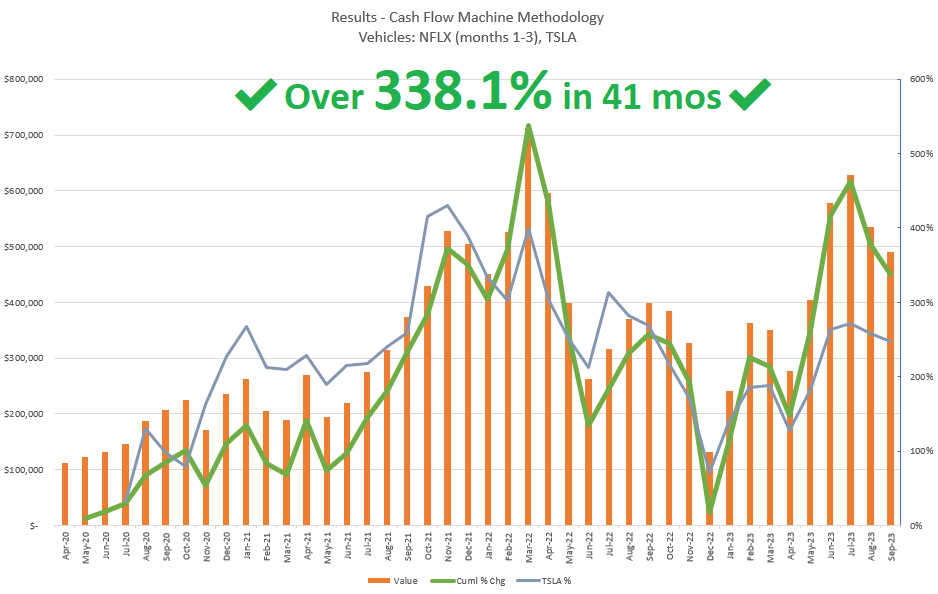
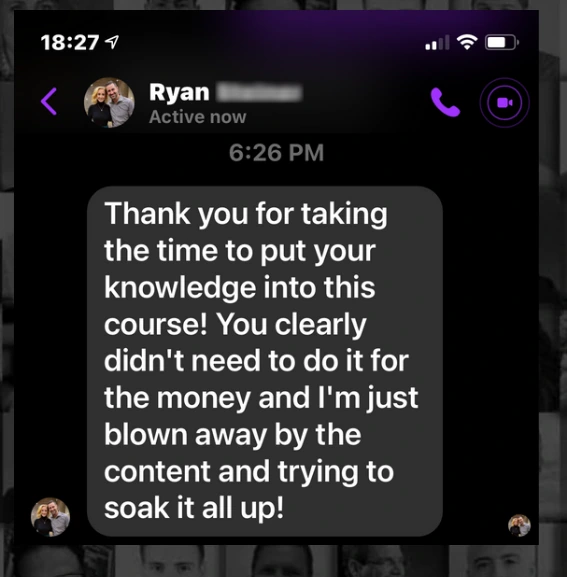
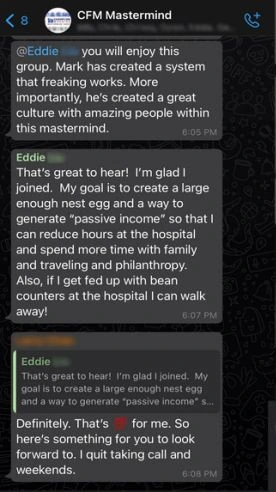
The Cash Flow Machine system has been used by more than 1,400 students across a wide range of account sizes, experience levels, and financial goals. These testimonials are from real students.

Past performance does not guarantee future results. Individual results vary. Options trading involves risk and is not suitable for all investors.

In Depth

How To Build Repeatable Passive Income Now

Investing can be complex and even intimidating. Or sometimes it can be too easy — to click a mouse and put $100,000 into a stock without a strategy for what to do AFTER you buy it.

Navigating the world of personal finance, especially as it relates to preparing for retirement or building an emergency fund, is daunting for most investors. The fear of running out of money, or not having enough to cover unforeseen expenses, is a significant concern. Strategic instruments like passive income through covered calls — squeezing the Juice out of stocks you already own — can provide both stability and growth.

The Importance of Passive Income

Passive income is essential in today's economy because it allows you to earn money with minimal daily effort, which provides financial freedom and peace of mind. The beauty of passive income is its ability to create a safety net — turning saved money into a continuous income stream. This approach is crucial not only for retirees but for anyone looking to supplement an active income and reduce financial stress.

Why Covered Calls Are a Smart Choice

Covered calls are an investment strategy where an investor sells call options against shares they already own. The strategy is particularly attractive for several reasons:

  1. Additional Income Stream. Selling call options produces regular premium payments — the Juice — which can supplement income from other investments or pensions.
  2. Downside Protection. The Juice received from selling the option offers a buffer against moderate stock price declines.
  3. Portfolio Enhancement. Covered calls can increase the yield on a portfolio, turning stagnant stocks into income-generating assets.
  4. Flexibility and Control. The strategy lets investors generate income on their own terms — choosing when and how to sell options based on their financial goals.

Strengthening Retirement Income

As life expectancies increase, the need for robust retirement income strategies becomes more acute. Many people find that their savings may not be adequate to maintain their lifestyle through retirement. This is where passive income from covered calls becomes invaluable:

  • Longevity of Funds. Creating multiple income streams helps ensure that funds last longer and reduces the risk of depleting savings too early.
  • Consistent Cash Flow. Covered call income provides a steady flow of cash, which is crucial for managing regular expenses and enjoying a comfortable retirement.
  • Mitigation of Market Risks. Diversifying among income sources lets retirees buffer themselves against market volatility and economic downturns.

Case Studies and Success Stories

Sarah, a retired school teacher, used covered calls to generate additional monthly income that allowed her to travel and pursue her hobbies without worrying about her financial reserves depleting.

David, approaching retirement, adopted a passive income strategy to minimize his reliance on working full time — easing into retirement with confidence and security.

These are illustrative examples. For real student testimonials, see the carousel above and our full results page.

How the Cash Flow Machine System Works

  1. Personalized Assessment. A tailored financial analysis aligned with your specific retirement goals and risk tolerance.
  2. Strategic Implementation. Careful selection and management of covered call opportunities that fit your asset profile and income needs.
  3. Ongoing Support and Adjustment. Regular portfolio reviews and adjustments that respond to market changes and personal circumstances — keeping your income consistent and your portfolio growing.
  4. Empowerment Through Education. Knowledge and tools to understand and take control of your own financial future.

Transforming Your Financial Future

Imagine a future where financial worries are a thing of the past, and your money works for you — creating a stable, secure environment. The Cash Flow Machine system is designed to make this real. By leveraging the principles of passive income and covered calls, the system helps transform your financial outlook and provides peace of mind as you navigate retirement and beyond.

Recent Lessons from the Trading Desk

For deeper case studies of the system in action, our blog covers real trades and real adjustments:

Building reliable income through covered calls is more than a financial decision — it is a step toward a secure, prosperous future. Start on this path today and take control of your financial destiny.

FAQ

Frequently Asked Questions

What is the Cash Flow Machine system?
The Cash Flow Machine is a complete, rule-based covered call investing system developed by Mark Yegge over 45 years of professional market experience. It teaches investors how to generate consistent monthly income — the Juice — from stocks they already own by selling call options in a structured and defensive way. The system covers stock selection, market timing, chart entry, option selection, and critically, position adjustments when trades move against you.
Do I need to be an experienced trader to learn this?
No prior options experience is required. The Cash Flow Machine is designed to take investors from no knowledge of options through to confident, independent execution. The material covers nuance, adjustments, and multi-scenario management. What it requires is the ability to follow a systematic process and the willingness to spend time learning it properly.
How much time per week does this require?
The system is designed to operate in approximately 20 minutes a week once learned. The majority of the time is spent reviewing existing positions, assessing market conditions, and entering any new trades or adjustments. It is not a day-trading system.
What is the minimum account size to get started?
There is no formal minimum, but a practical starting point is $25,000 to $50,000 to allow for at least two or three diversified positions. Investors with larger accounts — $100,000 to several million — will find the system scales proportionally.
Is this gambling?
No. Covered calls are a risk-defined, income-generating strategy used by professional fund managers, pension funds, and individual investors worldwide. Covered call positions have defined risk parameters and produce income regardless of the direction the underlying asset moves (within a range). The Cash Flow Machine specifically emphasizes risk management and defensive adjustments as core skills.
What if the stock market crashes?
Market downturns affect every investment strategy. The Cash Flow Machine's Fortress strategy is specifically designed for defensive conditions — in-the-money covered calls provide downside cushion. The adjustment framework teaches students how to manage positions through drawdowns rather than simply holding and hoping. No strategy eliminates market risk.
Can I do this in my retirement account?
Yes. Covered calls are approved for use in most IRA and Roth IRA accounts at the Level 1 or Level 2 options approval tier. Many students run the system exclusively within their retirement accounts. The tax-advantaged environment enhances the compounding effect of reinvested Juice.
How is this different from a financial advisor?
A financial advisor typically charges an annual fee (usually 0.5 to 1.5 percent of assets) and focuses on long-term capital appreciation. The Cash Flow Machine teaches you to manage your own capital using a specific income strategy. There is no ongoing fee tied to your assets, no third party making decisions for your account.
What about taxes on options income?
Options premiums are generally treated as short-term capital gains for tax purposes, taxed at ordinary income rates. Trading within a traditional IRA defers taxes; trading within a Roth IRA may allow income to grow tax-free. Consult a qualified tax professional for advice relevant to your situation.
Is this financial advice?
No. The Cash Flow Machine is an educational program. All content — including the free training, the courses, and this website — is for educational purposes only and does not constitute personalized financial, investment, or tax advice. Options trading involves real risk. Past results are not indicative of future performance.
How long until I see results?
Most students who complete the training can place their first covered call trade within a few weeks. Income from the first position is generated at the time the call is sold — the Juice is deposited immediately. Building a full portfolio of well-managed positions typically takes two to three months of active practice.
What kind of returns should I expect?
The Cash Flow Machine targets 2 to 4 percent per month in premium income as a general benchmark. Where you land in that range depends on which strategy you choose (Fortress is more conservative with smaller premiums; Rocket pursues more Juice with slightly more upside exposure), how volatility behaves, and how consistently the system is applied. This is a target, not a guarantee.
What happens after I watch the free training?
The free 50-minute training walks through the core framework — the four cornerstones, the three strategies, and an introduction to the adjustment system. At the end you will have a clear understanding of the approach and an opportunity to learn more about the full mentorship program.
Do you offer 1-on-1 mentorship?
Yes. In addition to the core curriculum, the program includes mentorship options for students who want more direct support. The free training provides full details. The starting point for everyone is the free training at /options-mentorship.
How do I know if this is right for me?
The Cash Flow Machine is most relevant for investors who already have a portfolio of at least $25,000 to $50,000, want to generate monthly income rather than waiting purely for capital appreciation, and are willing to spend approximately 20 minutes a week learning a systematic process. It is not a fit for fully passive, hands-off management or speculative trading. The free training is the best way to evaluate fit.
Your Next Step

Start Squeezing the Juice From Your Portfolio

Your portfolio has the capacity to produce consistent monthly income right now, using stocks you already own or can select using a proven framework. The Cash Flow Machine provides the complete system — the strategy, the stock selection criteria, the three strategies that let you dial-in your income, and the adjustment rules that most covered call courses never teach.

The free 50-minute training is the place to start. It covers the full framework at no cost, with no obligation.

Unlock the Free Training →

Free training. No credit card required. 50 minutes.