
TL;DR
- Covered call adjustment strategies let you reposition a short call when the stock moves up, down, or sideways without abandoning the income trade.
- The four core adjustments are roll up, roll down, roll out, and roll up-and-out, each addressing a different market move.
- Roll up to recapture upside, roll down to harvest more premium on a pullback, roll out to extend time and collect more juice.
- For covered calls for retirement income, the goal of every adjustment is to keep cash flowing while protecting your cost basis.
- Always close the original call when it has lost 70 to 80 percent of its value or when delta crosses 0.70.
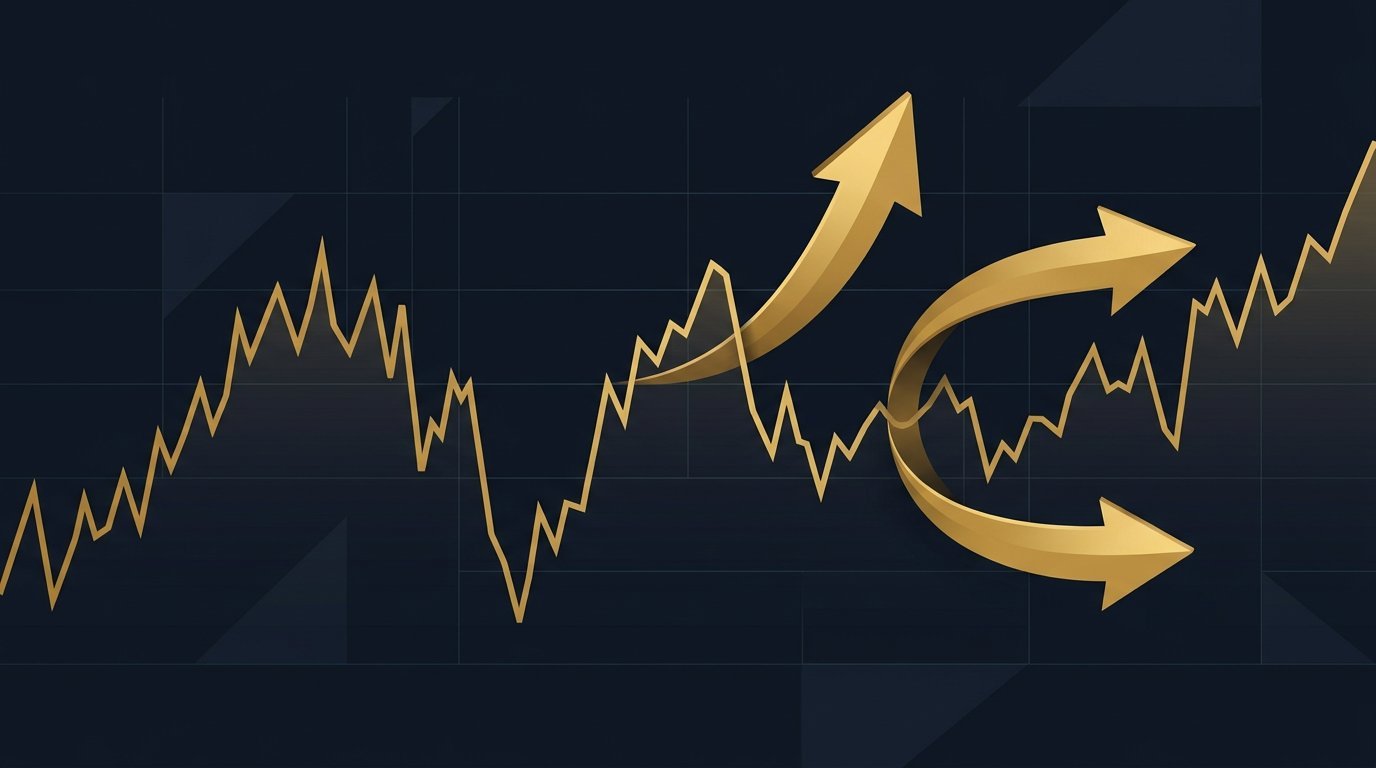
Markets move. That is the only thing they are guaranteed to do. And when you sell covered calls week in and week out, sooner or later the stock will rip past your strike, gap down on bad news, or grind sideways while you watch your premium decay. The investors who get crushed in moments like that are the ones who set the trade and walk away. The investors who quietly compound through every market — including the retirees I work with using covered calls for retirement income — are the ones who know the four covered call adjustment strategies cold and pull the trigger without flinching.
I have been trading options for 40+ years. I have managed covered calls through 2008, 2020, the 2022 drawdown, and every grinding sideways tape in between. The techniques in this guide are the same ones I teach inside the Elite Mastermind and use in my own portfolio every single week.
The Real Problem: Most Traders Treat Covered Calls Like Set-And-Forget
Here is what I see over and over. A new trader sells a covered call on Apple at the $200 strike for $3.50. Two weeks later Apple is at $208 and the call is worth $9.20. The trader panics, lets the shares get called away, and feels like they did something wrong.
They didn’t do anything wrong selling the call. They did something wrong by not having an adjustment plan.
A covered call is not a buy-and-hold investment. It is a managed income trade. Every single position needs an exit plan and an adjustment plan before you ever click sell. Without one, you are just guessing — and guessing is not how anyone funds a 25-year retirement.
This matters even more when you’re using covered calls for retirement. Retirees can’t afford big drawdowns and they can’t afford to leave juice on the table either. Adjustments are the bridge between those two needs.
The Four Core Covered Call Adjustment Strategies
Every adjustment you will ever make falls into one of four buckets. Memorize these. Tape them to your monitor.
1. Roll Up (Stock Rallies Above Your Strike)
Your short call is now in the money and threatens early assignment. Buy back the existing call, sell a new call at a higher strike in the same expiration. You usually pay a small debit but you have raised your potential upside on the shares.
2. Roll Down (Stock Pulls Back)
Your short call has lost most of its value. Buy it back cheap, sell a new call at a lower strike in the same expiration. You collect fresh premium and rebuild your income engine on the same shares without waiting for expiration.
3. Roll Out (Time Is Running Out)
You like the strike but want more time decay working for you. Close the current call, sell the same strike in a later expiration. This is pure income — no change to your strike, just more juice for adding 30 to 45 more days.
4. Roll Up-And-Out (Stock Has Run Hard)
This is the most common rescue trade. Your stock blew through the strike and you don’t want to give up the shares. Close the current call and sell a higher strike in a later expiration. Done correctly, you get a small credit, defer assignment, and recapture upside.
Numerical Example: Rolling Up-And-Out on a 200-Share AAPL Position
Let me walk through a real example with the kind of numbers a Cash Flow Machine member would see this week.
You own 200 shares of AAPL with a cost basis of $192 per share — total capital deployed roughly $38,400. On April 1 you sell two May 16 expiration $200 calls for $3.50 each. Premium collected: $700.
By April 28, AAPL has rallied to $211. Your $200 call is now worth $12.40, deep in the money, with delta around 0.92. If you do nothing, your shares get called at $200 on May 16. You lock in a profit of ($200 − $192) × 200 + $700 = $2,300, but you also cap your upside on a stock that may keep running.
Here is the roll up-and-out. Buy back the May 16 $200 calls at $12.40 each, total debit $2,480. Sell two June 20 expiration $210 calls at $6.20 each, total credit $1,240. Then sell two July 18 $215 calls at $7.10 each — wait, simpler version, just do the June leg.
Cleaner version: close the May $200 for $12.40, open the June $210 for $13.50. Net credit per share: $1.10, total credit $220. You raised your strike by $10 per share — that is $2,000 of additional upside potential — collected another $220 in juice, and bought yourself another month for the trade to work.
| Step | Action | Cash Flow |
|---|---|---|
| 1 | Sell 2 x May 16 $200 calls @ $3.50 | +$700 |
| 2 | Buy back 2 x May 16 $200 calls @ $12.40 | −$2,480 |
| 3 | Sell 2 x June 20 $210 calls @ $13.50 | +$2,700 |
| Net | Total premium banked plus higher strike | +$920 plus $2,000 of new upside |
That is the power of a planned adjustment. You did not get steamrolled by the rally. You earned more, raised your ceiling, and stayed in the trade.
Risk Management Rules I Trade By
Adjustments without rules are just hope dressed up in a tuxedo. Here are the rules I follow on every position:
- The 80 percent rule. When the short call has lost 80 percent of its initial value, close it. Do not wait for the last 20 percent — the risk-to-reward inverts.
- The 0.70 delta line. If the short call delta crosses 0.70, you are likely getting assigned. Adjust now or accept assignment intentionally — never accidentally.
- Always net credit when possible. A roll that costs more than $0.10 in net debit is usually a bad roll. Either go further out in time, accept assignment, or skip the cycle.
- Never roll a losing thesis. If the underlying stock is broken — earnings miss, broken trend, fundamental damage — do not roll. Sell the stock and find a healthier candidate. The Fortress, Balance Point, and Rocket strategies all start with a quality underlying.
- Mind the dividend. If your short call is in the money the day before ex-dividend and the time value is less than the dividend, you are at high risk of early assignment. Roll out or close.
How Adjustments Fit With My Three Cash Flow Machine Strategies
The adjustment toolbox stays the same across all three of my income systems, but the trigger points differ. The Fortress is the most conservative, so I am quicker to roll defensively when a stock breaks support. The Balance Point brings in the most income — the most juice — so I am willing to absorb more drawdown before rolling down. The Rocket aims for upside, so I roll up aggressively to keep ceilings high. All three are pure income strategies, not capital-gains strategies, which is exactly why they translate so well to covered calls for retirement income — you are getting paid every month from your existing share base.
Frequently Asked Questions
When should I adjust a covered call instead of letting it expire?
Adjust when the short call has lost 70 to 80 percent of the premium you collected, or when the stock has rallied 5 percent or more above your strike. Both situations mean the trade has run its useful life and capital should be redeployed.
What is the difference between rolling up and rolling out?
Rolling up moves the strike higher in the same expiration to capture more upside. Rolling out keeps the same strike but moves to a later expiration to collect more time decay. Rolling up-and-out does both at once and is the most common rescue trade when the stock has rallied through your strike.
Can I roll a covered call for a credit when the stock has run up sharply?
Usually yes, if you go 30 to 60 days further out in time. Longer-dated options carry more time premium, which lets you raise your strike and collect a small net credit. If the only way to roll for credit is 90+ days out, accept assignment and start a fresh trade — your capital is better off in a clean position.
Does adjusting a covered call work inside a Roth IRA or traditional IRA?
Yes. Every roll, buyback, and reopen is allowed at Level 2 options approval, which all major brokers grant for covered calls. Inside a Roth IRA every dollar of premium and every dollar of adjustment profit is tax-free for life. That is a foundational reason why active adjustment is so powerful for covered calls for retirement income — the IRS never takes a cut.
Putting It All Together
Covered call adjustment strategies are not optional. They are the difference between a part-time trader who gets shaken out every cycle and a serious income investor who compounds quietly through every market. Roll up. Roll down. Roll out. Roll up-and-out. Memorize the four moves, learn when each one fires, and build the discipline to execute them without emotion.
If you want the full system — the entry rules, the adjustment triggers, the position sizing, and the actual weekly trades I make using Fortress, Balance Point, and Rocket on real retirement portfolios — grab my free MasterCourse at cashflowmachine.net/options-mentorship. It is the same training I send to every new Cash Flow Machine member, and it will save you years of expensive mistakes.
Related: Read more about How to Roll Covered Calls: The Complete Guide to Extending and Adjusting Your Positions.
Related: Read more about How to Roll Covered Calls Up and Out: The Complete Guide to Rolling Mechanics.
For deeper reading on the foundational mechanics of the strategy, see our resource page on covered calls, and watch the rolling and adjustment walkthroughs on the @coveredcalls YouTube channel.
Educational disclaimer: This article is for educational purposes only and is not financial, tax, or investment advice. Options trading involves significant risk and is not appropriate for every investor. Real trade examples shown are illustrative; option prices and stock prices change continuously. Consult a licensed financial advisor before making any investment decision.